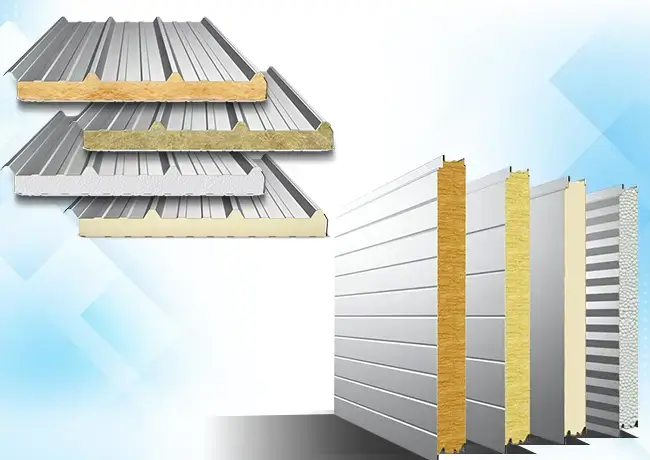
A sandwich panel is a composite building material consisting of a low-density insulating core (such as expanded polystyrene, mineral wool, or polyurethane foam) bonded between two sturdy outer layers, typically galvanized or aluminum steel sheets. They are primarily used as non-structural cladding for walls and roofs where thermal and sound insulation are required
The core material determines the panel's primary characteristics, such as R-value (thermal resistance), sound insulation class (STC), and fire rating.
Panel Built
Panel Built
+2
Expanded Polystyrene (EPS):
Properties: Cost-effective, lightweight, and offers good thermal insulation. The foam contains trapped air which slows down heat movement.
Fire Rating: Generally carries a Class B or Class 2 fire rating, meaning the core material can extinguish itself once the flame source is removed. For improved fire protection, other options are recommended.
Polyurethane (PU) and Polyisocyanurate (PIR):
Properties: Known for exceptional thermal insulation due to low thermal conductivity, making them ideal for energy-efficient buildings and cold storage facilities. PIR offers enhanced fire resistance compared to standard PU.
Fire Rating: PIR cores are often used in applications where fire safety is paramount, offering high-quality fire safety performance and often achieving a Class A rating or a specific "1 Hour Fire Rated" classification with certain configurations.
Mineral Wool (Rockwool or Glasswool):
Properties: Favored for superior fire-resistant and soundproofing qualities. They are heavier than foam-based panels but provide excellent acoustic insulation.
Fire Rating: An ideal choice for buildings where fire safety is the primary concern, such as industrial facilities and manufacturing plants.