CNC (Computer Numerical Control) metal cutting is a precision manufacturing process that uses pre-programmed computer software to dictate the movement of factory tools and machinery. This technology allows for the creation of complex, high-tolerance parts that are virtually impossible to produce with manual methods.
Different technologies are chosen based on material thickness, required precision, and budget:
CNC Laser Cutting: Uses a high-power focused laser beam to melt or vaporize material. It is known for its extreme precision (tolerance of ±0.01mm) and clean, burr-free edges, making it ideal for thin to medium-thickness sheets.
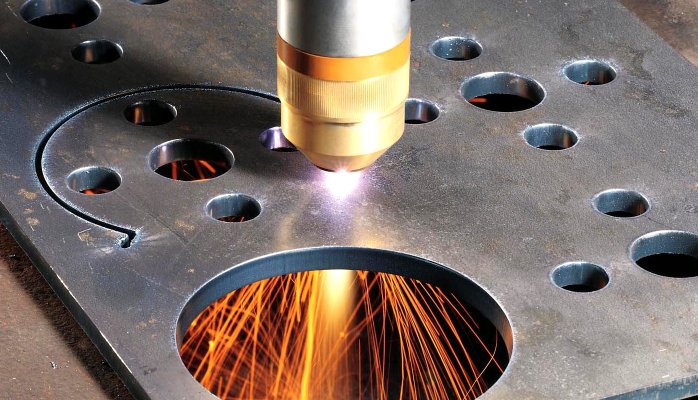
CNC Plasma Cutting: Employs an electrically conductive gas to transfer energy from a power source to the metal via a high-temperature plasma arc. It is highly efficient for cutting thick, conductive metals like steel and aluminum.
CNC Milling & Turning: These mechanical processes use physical cutting tools (like end mills or lathes) to remove material. Milling is best for prismatic parts with pockets and holes, while turning is used for cylindrical components.
Waterjet Cutting: Uses a high-pressure stream of water, often mixed with abrasive particles, to erode a narrow line in the material. Because it is a "cold" process, it is ideal for heat-sensitive metals and can cut through materials over 100mm thick.
Wire EDM (Electrical Discharge Machining): Uses electrical sparks to erode material. It provides exceptional precision for hard metals but typically operates at a slower speed